
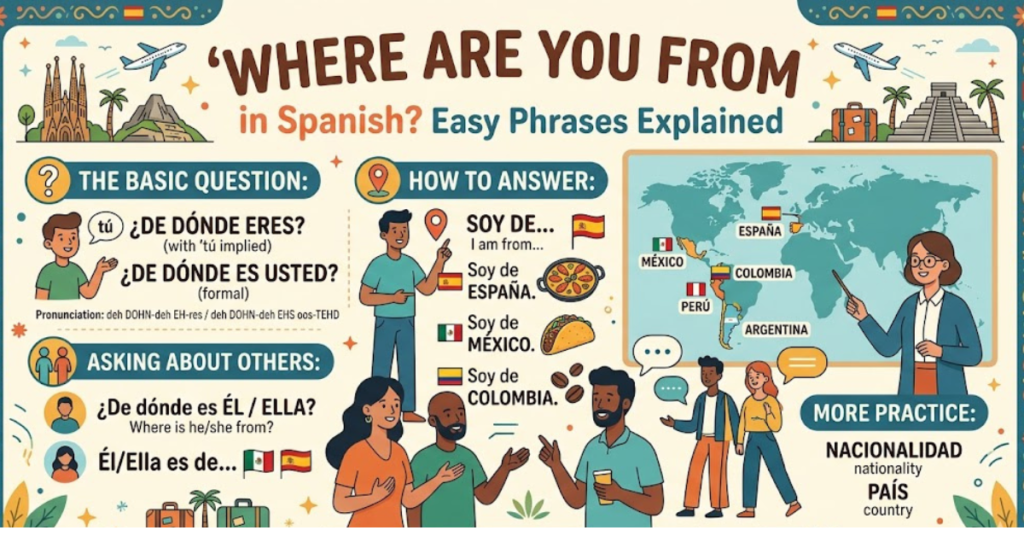
Have you ever met someone who speaks Spanish and wanted to get to know them better? One of the first things we ask new friends is where they are from. Asking where you from in Spanish is a great way to start a fun conversation. It helps you learn about different cultures and places around the world. Whether you are traveling or just chatting with a neighbor, knowing this phrase is very useful. Let’s look at how to say this easily and correctly in your next talk.
The Most Common Way to Ask
The most popular way to say where you from in Spanish is “¿De dónde eres?” This is a very simple phrase that works in almost every situation. You use it when you are talking to a friend or someone you know well. When you say this, the person will understand that you are curious about their home country or city. It is the perfect starting point for any new friendship. Try saying it slowly to practice your pronunciation until it feels natural to you.
Using the Formal Way
Sometimes you might meet someone older or a new boss. In these cases, you want to be very polite. Instead of asking where you from in Spanish using the casual style, use the formal version. You say, “¿De dónde es usted?” Adding the word “usted” makes the sentence sound much more respectful. It shows that you have good manners and care about how you speak to others. This small change makes a big difference when meeting new people in a professional setting or in formal situations.
How to Answer the Question
Knowing how to ask where you from in Spanish is only half of the fun. You also need to know how to reply! To tell someone where you are from, start with the words “Soy de…” and then add your country or city. For example, if you are from the United States, you say “Soy de Estados Unidos.” This is short, clear, and very easy to remember. Practice this response with a friend so you feel ready the next time someone asks you about your home.
Understanding Country Names
When you learn where you from in Spanish, it helps to know the names of different countries. Most Spanish names for countries are very similar to English. For example, Mexico is “México” and Spain is “España.” Some might sound a little different, like “Alemania” for Germany. Learning these names will help you understand more when people tell you their home. You can look up a simple map or a list to see how many countries you can name in Spanish today.
Asking About Cities
What if you want to know which city someone lives in? You can still use the phrase where you from in Spanish to get started. If you want to be more specific, you can add “ciudad” which means city. People love talking about their hometowns because it brings up happy memories. By asking this, you show that you are truly interested in the other person. They will appreciate that you took the time to ask about their favorite places.
Connecting Through Travel Stories
Asking where you from in Spanish is just the opening door. Once you know where they are from, you can ask about the food or the weather there. This keeps the conversation moving forward in a natural way. Sharing stories about travel is a wonderful way to build a real bond. Even if you haven’t traveled much, you can listen and learn a lot from their experiences. This makes every chat an exciting learning opportunity for both of you.
Why Location Matters in Culture
In many Spanish-speaking cultures, where you are from says a lot about your traditions. Asking where you from in Spanish allows people to share their pride in their roots. Some people might talk about local festivals, special dances, or delicious holiday meals. You will find that people are usually very happy to tell you about what makes their home special. Listening to these details helps you understand their culture much better than just reading about it in a textbook.
Practicing with a Language Partner
The best way to master where you from in Spanish is by using it with others. Find a language partner or a friend who is also learning. You can take turns asking and answering the question. Practice is the secret to getting better quickly. Don’t worry about making mistakes, because that is how we all learn! The more you speak, the more confident you will become. Soon, you will be able to ask this question without thinking about it at all.
Understanding Regional Differences
Did you know that Spanish is spoken in many different ways? While where you from in Spanish is understood everywhere, some regions have their own special slang. For example, in some places, people might add extra words to be more friendly. That is the beauty of this language! It is constantly changing and growing. If you travel to different countries, you will notice these cool differences. It makes learning Spanish feel like a giant, worldwide treasure hunt.
Avoiding Common Mistakes
When you learn to ask where you from in Spanish, keep it simple. Some people try to use very big words that are not needed. You do not need to be perfect to be understood. Just focus on being clear and kind. If you forget a word, it is totally okay to smile and try again. People will appreciate your effort, and that is what really counts in communication. Keep your sentences short and sweet for the best results.
Conclusion
To really get good at asking where you from in Spanish, keep listening to songs or watching movies. Pay attention to how people introduce themselves. You will hear many examples of people sharing their origins. Try to copy their tone and speed. This will help you sound much more natural when you speak. Remember, the goal is to make a connection. When you ask where you from in Spanish with a big smile, you are already halfway to making a new friend!
Frequently Asked Questions
1. Is it rude to ask where someone is from? No, it is usually a friendly way to start a conversation and show interest in their background.
2. Can I use the same phrase for a man or a woman? Yes! The phrase “¿De dónde eres?” is the same for everyone, regardless of their gender.
3. What if I do not understand their answer? It is okay to ask them to repeat it slowly by saying “más despacio, por favor.”
4. Is there a difference in pronunciation between countries? Yes, accents can vary, but the basic words for asking where you are from stay the same.
5. How can I learn more Spanish phrases quickly? Use apps, watch videos, or practice with a native speaker for just ten minutes every single day.
6. Does “donde” always need an accent mark? Yes, when used in a question, “dónde” always needs an accent mark over the “o.”