
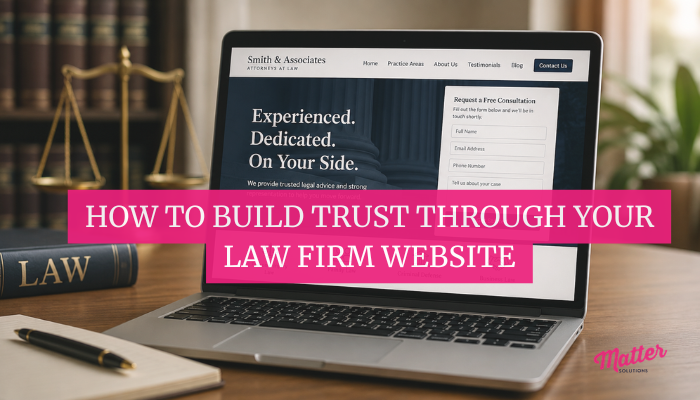
Your law firm website can build trust through clear professional signals and consistency across the places prospects check before they call. It’s also important to handle online threats quickly so your firm maintains a strong and credible reputation.
At Matter Solutions, we’ve spent over two decades building digital strategies for Australian law firms. Our team combines industry experience with customised solutions that increase trust and strengthen your firm’s online presence.
In this article, we’ll walk you through the six trust signals your law firm website should have. You’ll also learn how to handle negative reviews and defamation, and where else potential clients check your credibility.
Read on to find out what makes potential clients trust one law firm over another.
What Does It Take to Build Trust on Your Law Firm Website?
Your law firm website needs six core trust signals working together across every page. Prospects assess these signals within seconds to decide whether your firm appears credible, qualified, and easy to contact.

Here’s what each of those six trust signals covers:
- Professional Headshots and Bios: Faceless firms struggle to build credibility. You should pair each headshot with admission year, university, accredited specialisations, and a short bio that explains how you help clients in plain language.
- Verified Reviews and Testimonials: Pull in your Google reviews so prospects don’t have to leave the page to check. Plus, add a few written testimonials that name the legal issue and the outcome, rather than generic “great service” lines found on any firm’s site.
- Detailed Practice Area Pages: It’s not enough to have just one blanket “services” page. Rather, you must build separate pages for family law, criminal defence, commercial litigation, and every other area you offer. The content of these pages should address the specific client’s problem.
- Case Results and Outcomes: Specific results help people understand what your firm has achieved. For example, “Secured a $480k property settlement for a stay-at-home parent” or “Reduced spousal maintenance from an indefinite term to three years”.
- Recognition Badges: What others say about you carries more weight than what you say about yourself. We recommend displaying law society memberships, Doyle’s Guide rankings, awards, and accredited specialist credentials.
- Clear Contact Information: If your phone number is hidden, prospective clients may leave without contacting you. Instead, place it in the header, add enquiry forms to your practice area pages, and offer online booking so people can reach your firm the way they prefer.
The more confident visitors feel on your website, the more likely they are to make contact.
How Do You Handle Threats to Your Law Firm Credibility?
You can protect your law firm’s credibility by responding to negative reviews quickly and taking legal action against defamatory content when necessary. Reputation takes years to build, yet one damaging post can quickly affect how prospects view your firm.

Since not every situation requires the same response, it’s important to know when Australian defamation law may apply.
We’ll now explain how to handle each threat.
Responding to Negative Reviews
A well-handled negative review often builds more trust than ten positive ones. And when you reply to them, you must stay factual, professional, and brief. There shouldn’t be any defensiveness or emotion in the response.
More specifically, try to address the concern publicly and then offer to take the details into a private channel. This way, future prospects will see that you handle problems with composure rather than denial.
Pro Tip: Keep encouraging past clients to leave honest reviews so a single bad one doesn’t dominate your overall rating.
Handling Defamatory Content
What happens when criticism about your firm crosses the line into defamation? The Defamation Act 2005 applies across most Australian states, which sets out how lawyers and qualifying small firms can pursue claims.
When you believe content about your agency is defamatory, your first step is usually to send a concerns notice. This document identifies the harmful statements and explains the damage they may cause. It also asks the publisher to remove or correct the content before the issue escalates.
Court action is possible, too, but delays can increase your reputational harm (some sites take time to process legal complaints).
Where Else Do Prospects Check Your Firm’s Credibility?
Prospects also assess your firm’s credibility through platforms like Google Business Profile and legal directories. Online sources like these help people verify the firm’s reputation, experience, and professionalism.
If the information is inconsistent across multiple platforms, visitors may lose confidence in you and continue searching for firms elsewhere.
Below are some common ways potential clients verify a law firm’s credibility outside its website:
- Google Business Profile: Your star rating and most recent review responses appear in the local pack and on Maps. That’s why we advise keeping your profile complete, refreshing photos regularly, and responding to every review within 48 hours.
- Legal Directories: New clients check Doyle’s Guide, FindLaw AU, and your state Law Society register to confirm your credentials. Conflicting names, addresses, or practice areas across these sites raise immediate questions about your firm.
- Social Media Channels: A dormant LinkedIn page tells your site visitors that you’re not engaged with your profession. So, you need to post regular case insights, firm news, or commentary on legal developments. It’ll show that your practice is active, experienced, and engaged with current legal issues.
- AI Search Summaries: Ask ChatGPT, Gemini, or Google AI Overviews to describe your firm. If the summary is vague, overlooks your practice areas, or mentions competing firms, it often points to a weak or unclear online presence.
To sum it up, a clear and consistent online presence helps clients feel more certain about choosing your firm.
Audit Your Law Firm Credibility Today
Trust in your law firm website comes from several signals working together rather than one quick fix. Professional headshots, verified reviews, and accurate directory listings all support your trustworthiness. However, even just one weak area can still create doubt.
You should run a credibility audit on your website and online profiles every quarter. This review will help you identify issues early before anyone else notices them.
If you want a second set of eyes on your site, the team at Matter Solutions can walk through every signal with you and find where to improve your firm’s reputation next.